The Estate
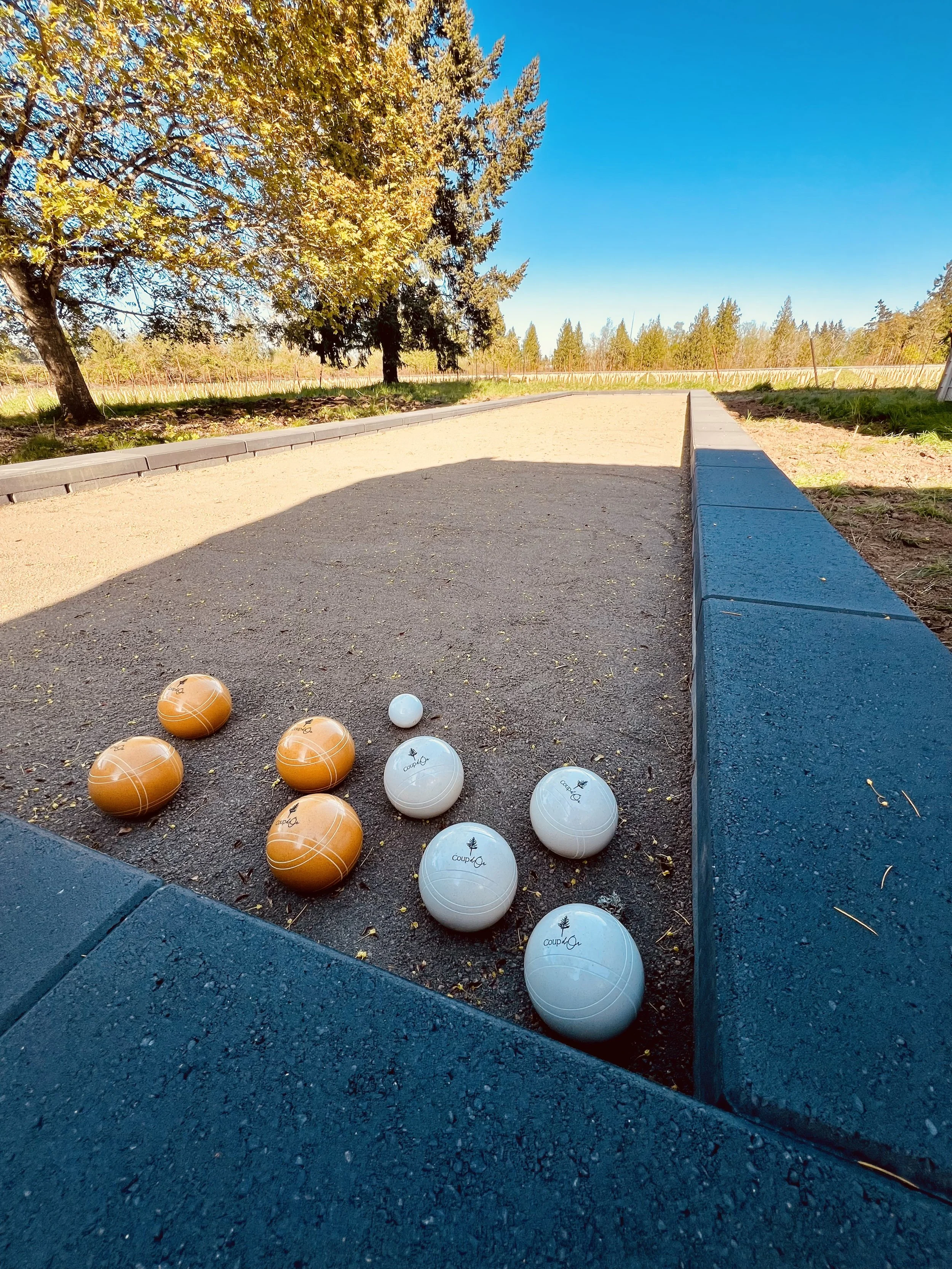
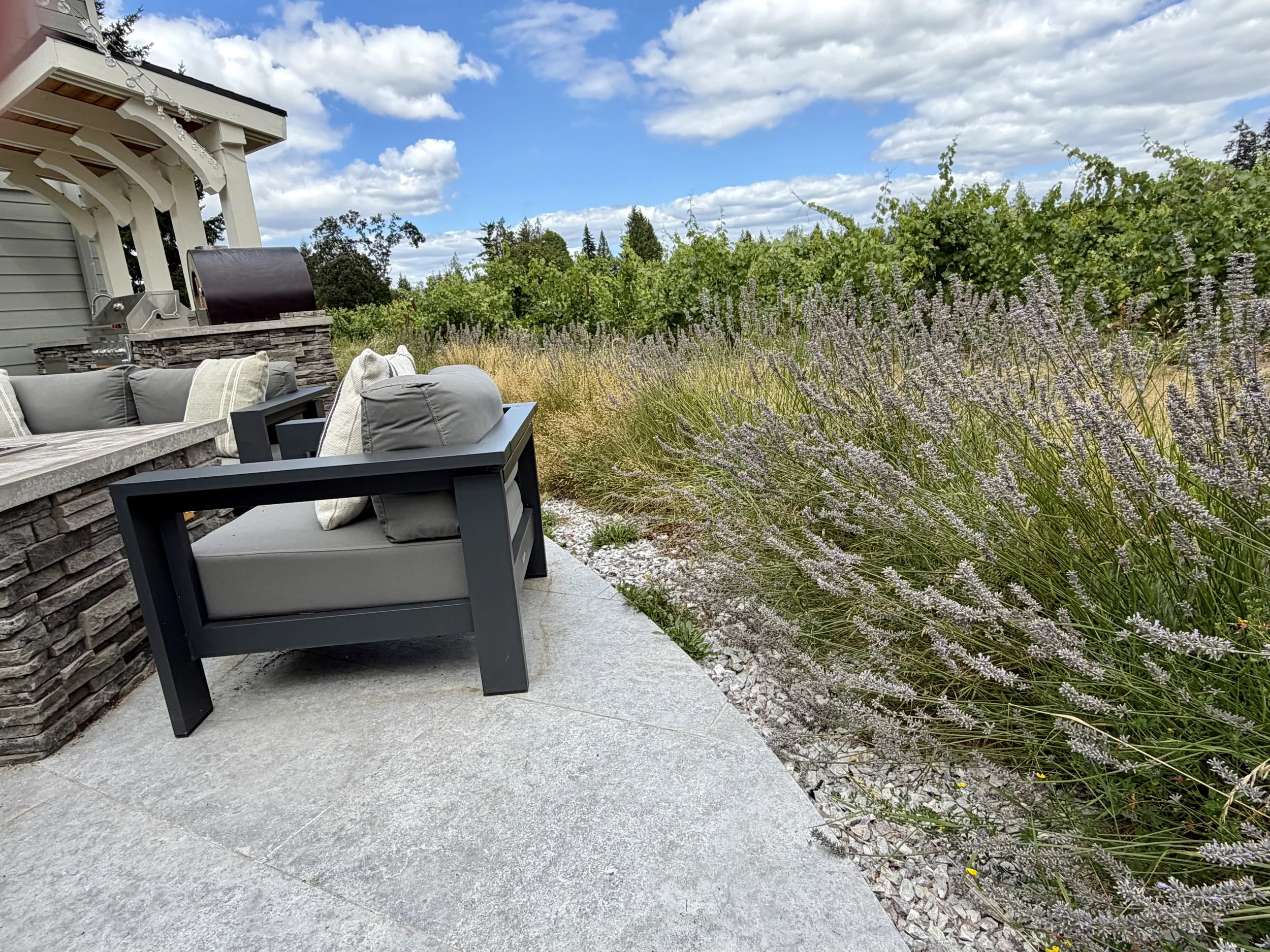
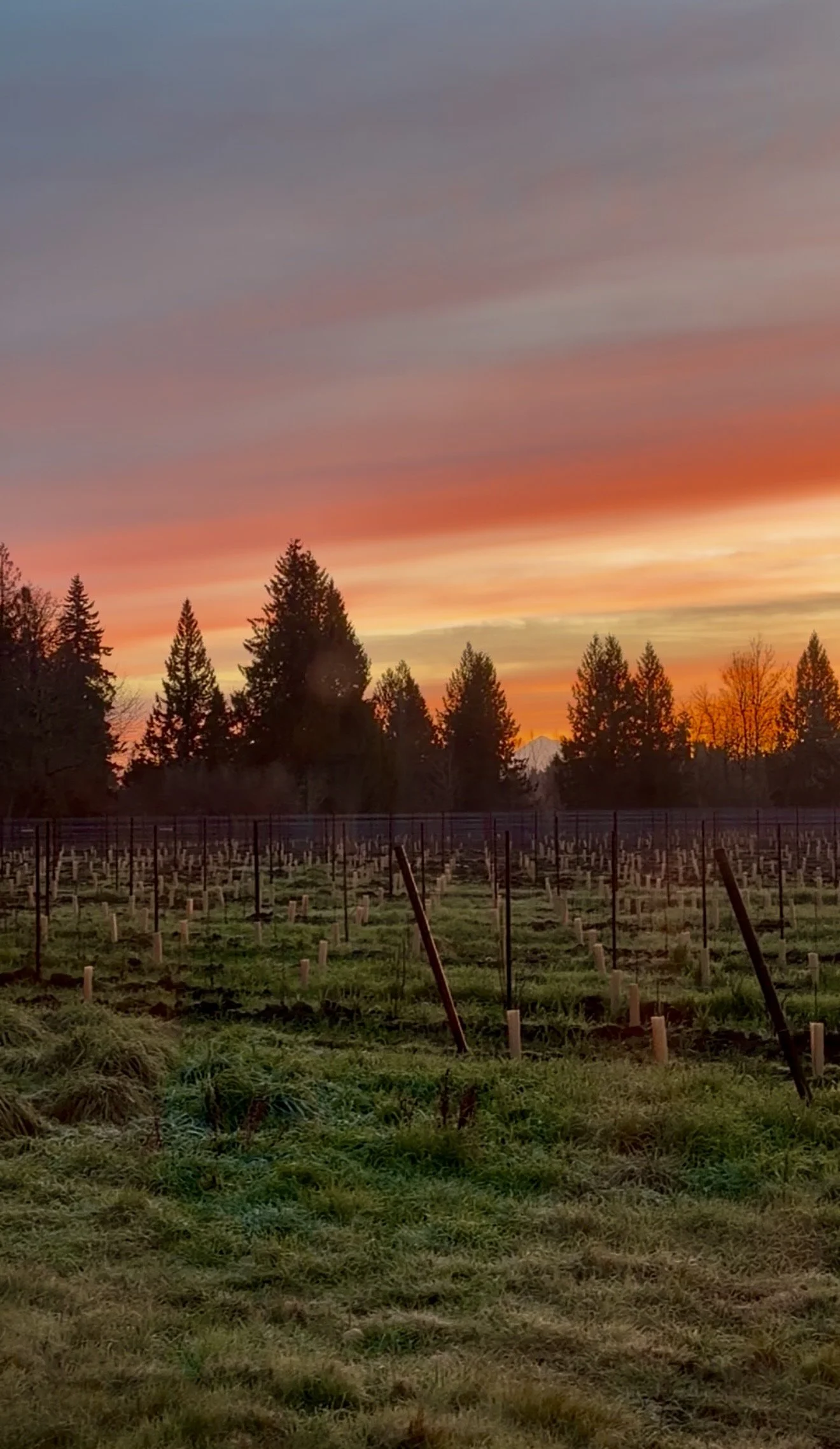
Coup d'Or sits on fifteen acres tucked off Barlow Road, in a quiet fold of the Willamette Valley where Douglas firs stand sentry and Mt. Hood watches from the east. It's a small property by design. We didn't want acreage for its own sake, we wanted a piece of ground we could know intimately, vine by vine, block by block, the way the great growers of Burgundy and Champagne have known their own small parcels for generations.
The land itself does most of the talking. Rain-washed soils, a climate that splits the difference between cool and generous, and increasingly long, warm summers that let fruit ripen slowly and fully. It's a profile that has quietly made the Willamette Valley one of the most exciting Pinot-growing regions in the world and one that, in its own way, echoes the growing conditions of Burgundy's Côte d'Or, the very namesake of our own "d'Or."
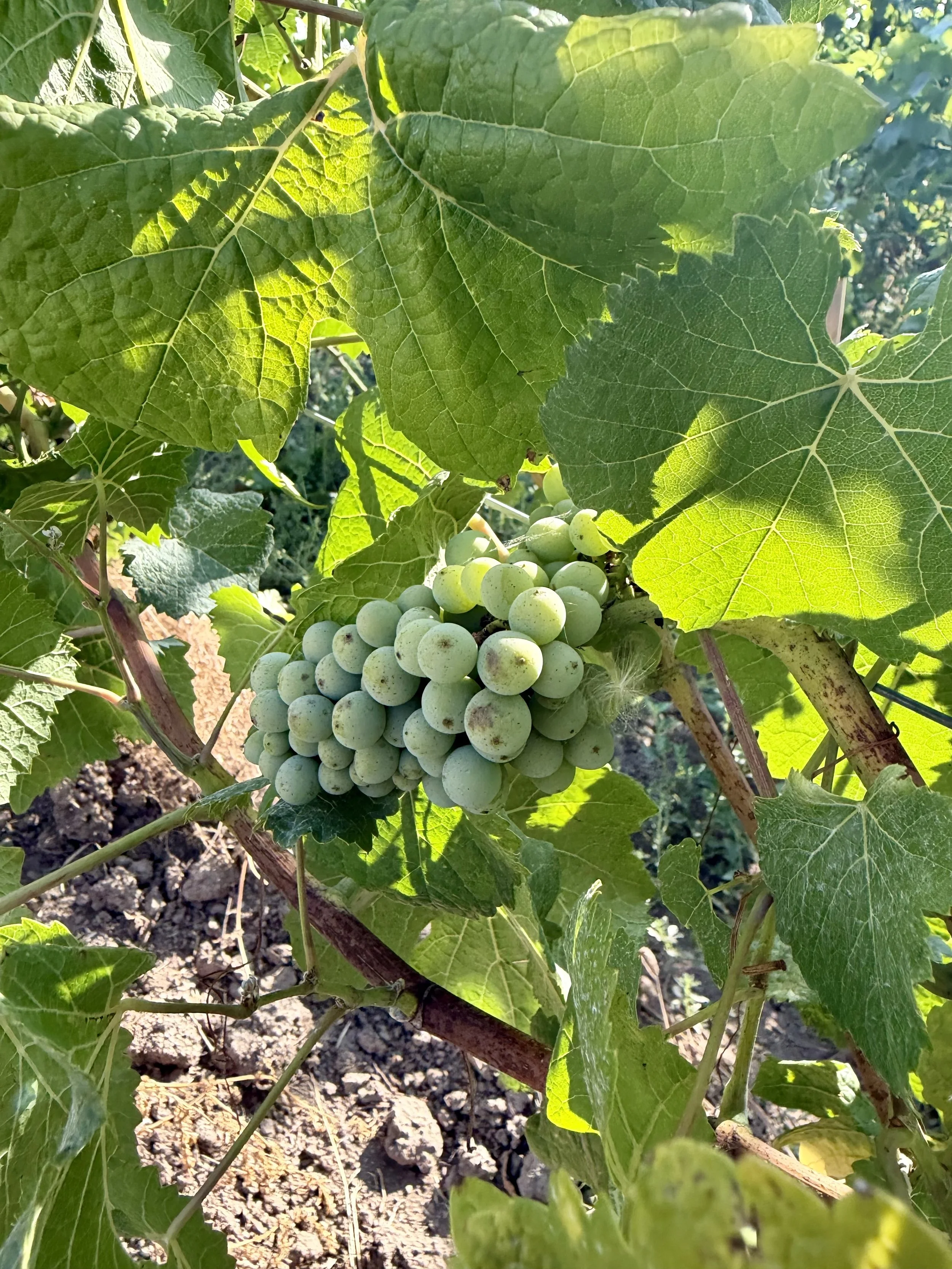
We chose three varietals: Pinot Meunier, Pinot Blanc, and a small block of Burgundy-style Chardonnay. Each has deep French roots, each does something different in the glass, and together they tell a fuller story of what this land is capable of.
The Varietals
Pinot Meunier
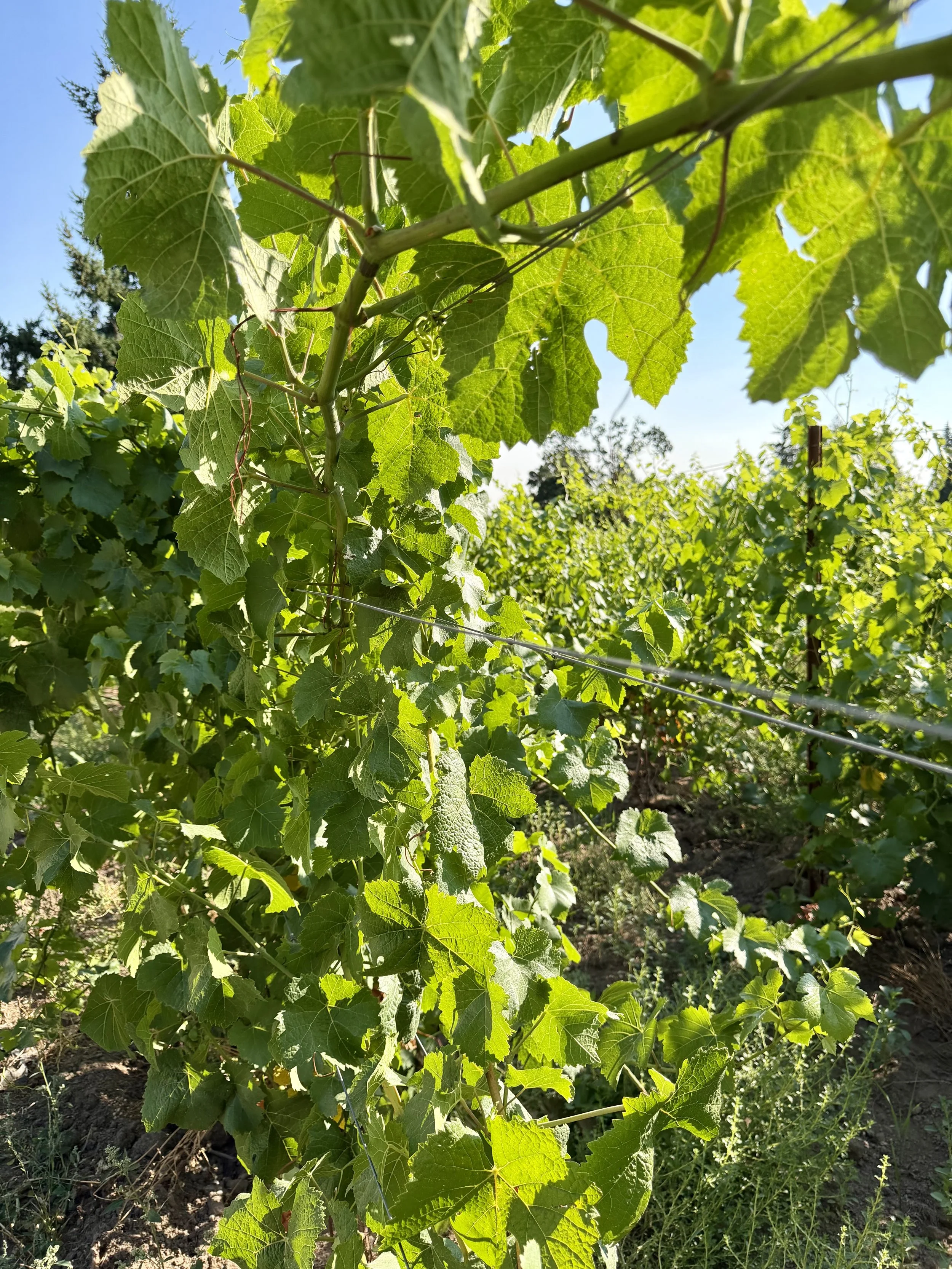
Pinot Meunier is the quiet third partner in Champagne, standing behind Pinot Noir and Chardonnay. Its name comes from the French meunier, "miller," a nod to the fine, floury down that coats the underside of its leaves. For centuries it's been the backbone grape in the vineyards ringing the Marne Valley, prized by growers because it buds late and ripens early, giving it a natural resilience against frost that its more famous siblings lack.
Meunier brings roundness, red fruit, and an easy, early-drinking charm, it's often the reason a young Champagne feels approachable rather than austere. We're growing it with two plans: a still red that lets its soft, fruit-forward character stand on its own, and a méthode champenoise sparkling wine made the traditional way, with secondary fermentation in the bottle, honoring the grape's original home.
Pinot Blanc
Pinot Blanc is a genetic mutation of Pinot Noir, in the same family, different disposition. It found its truest expression in Alsace, where cool continental winters and the rain shadow of the Vosges Mountains produce wines that are bright, textured, and food-friendly in a way that rarely gets the spotlight it deserves. Alsatian winemakers have long valued it for its versatility: crisp enough for an easy afternoon glass, structured enough to hold its own at a full table.
It's a grape that rewards patience and a light hand in the cellar, full of stone fruit and orchard notes, with a natural acidity that keeps everything honest. We think it will find a very comfortable home here.
Chardonnay
Our smallest planting is also our most personal nod to Burgundy, the region that gave the "d'Or" in our name its meaning. Chardonnay's story begins in the Mâconnais and reaches its fullest expression along the Côte de Beaune, where centuries of monks and growers mapped nearly every hillside by hand, learning which slopes gave minerality and which gave richness.
We're farming ours in that same spirit: small-block, hands-on, built around barrel fermentation and lees aging rather than heavy oak or overt fruit. The goal isn't a big, buttery Chardonnay, it's something closer to what Burgundy taught the world a Chardonnay could be: precise, textural, and expressive of the ground it came from.
Looking Ahead
Every vine on this property is still young. Our first harvest is planned for Fall 2027, and we'll open an exclusive opportunity to purchase futures that summer, for those who want to be part of the estate from its earliest days. Until then, we're doing the slow, unglamorous work that great wine actually requires, tending soil, training vines, and waiting for this golden piece of Oregon to tell us what it wants to become.